
Textures and comfort
Oily skin: light textures and measured cleansing
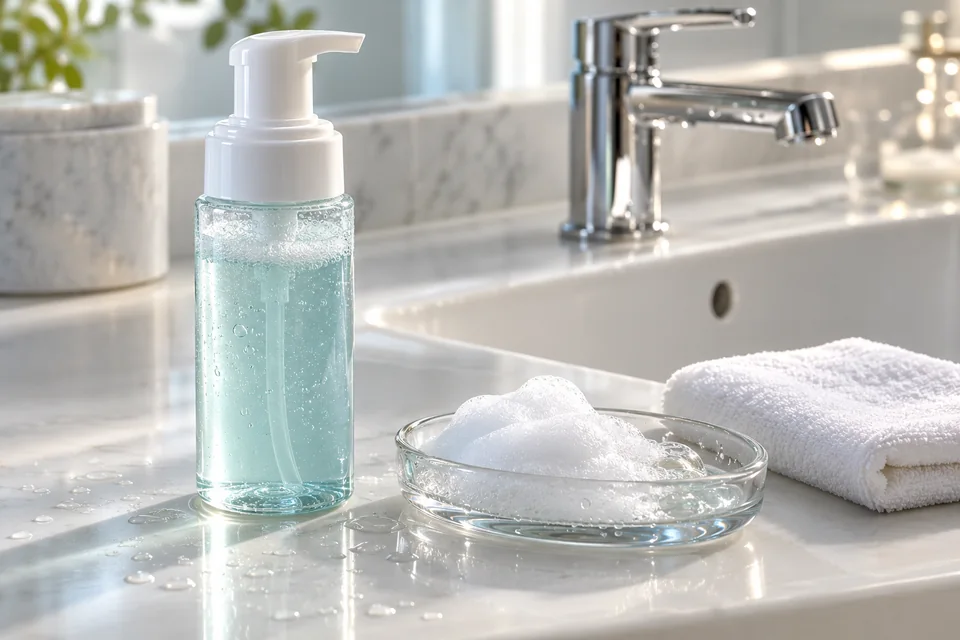
Shine does not justify aggressive washing
Oily skin can still feel uncomfortable after cleansing. Dermatologists recommend maintaining gentle habits instead of trying to remove every trace of an oily sensation. Compare cleansers and moisturisers through texture, stated use and personal comfort rather than assuming that a very dry finish means a formula is more suitable or more effective.
Separate a matte effect from treating a concern
Powder or primer can reduce the appearance of shine while makeup is worn without permanently changing sebum production. Oily-skin products serve other functions that need to be read individually. If inflammatory lesions are also present, distinguish cosmetic selection from acne management and discuss the relevant treatment question with a qualified professional.
Resources to explore further
American Academy of Dermatology — oily skin
Dermatological pointers for oily skin explain the balance between cleansing, moisturising and managing the appearance of shine.La Roche-Posay — Effaclar
Effaclar references provide cleansing and skincare examples to examine according to oiliness or the presence of blemishes.Clinique — soins
Clinique categories support comparisons of skincare textures before optionally adding a product intended for a matte makeup finish.