
Formulation bases
Oil-based cosmetics: the fatty phase and skin feel
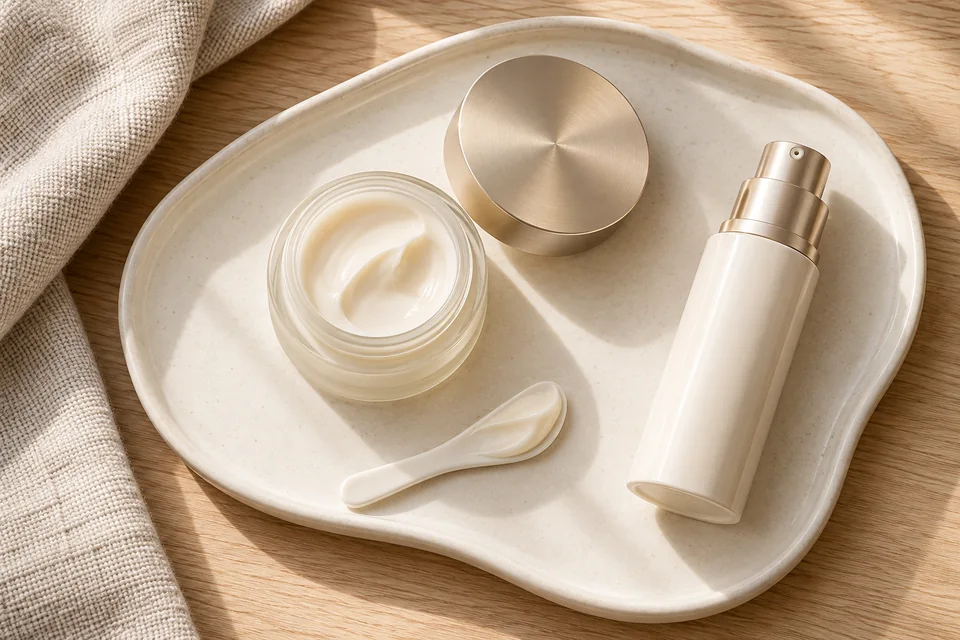
The fatty phase is not limited to plants
An oily base may combine botanical oils, esters and other emollients selected for skin feel or their ability to accommodate certain ingredients. Two transparent blends can consequently behave quite differently. Oil describes a family of textures rather than a uniform level of richness, natural origin or effectiveness on the skin.
Separating anhydrous products from rich emulsions
A water-free treatment differs from an emulsion combining oily and aqueous phases, even when both feel generous. Storage and handling instructions remain relevant in either case. Assess spreadability, residual film and compatibility with later steps without assuming that the absence of water automatically means a higher concentration of useful active ingredients.
Resources to explore further
CHANEL
CHANEL’s facial oils offer formulated texture examples to examine beyond the individual plant suggested by the presentation of a product.Officine Universelle Buly
Buly’s rosehip oil provides an identified botanical material for comparison with cosmetic oils made from several different ingredients.Croda Beauty
Croda’s Herbal Melt Butter demonstrates a rich emulsion, helping distinguish an oily sensation from a formula that actually lacks water.