
Luxury Korean Anti-Ageing Serum (Antieijing Sereom)
Defining the luxury Korean anti-ageing serum
A luxury Korean anti-ageing serum is a concentrated treatment from a high-end Korean skincare house, created to care for skin that shows the usual signs of time: fine lines, uneven texture, loss of bounce and a duller look. The Korean name for the category, written antieijing sereom, simply means anti-ageing serum.
It is important to be realistic. No cosmetic can stop the passage of time, and reputable houses describe their serums as products that support the appearance of skin rather than reverse biology. What a premium Korean anti-ageing serum can do is combine carefully chosen actives with a refined base, so that daily use feels like a considered ritual.
Korea approaches the subject with a preventive mindset. Care begins early, favours gentle consistency over aggressive treatments and treats sun protection as the first rule of looking after skin over the long term.
Typical ingredients in a Korean anti-ageing serum
Premium Korean age-defying serum formulas commonly draw on a few families of ingredients. Peptides are short chains of amino acids that appear in many prestige formulas. Niacinamide, adenosine and ceramides are widely used in Korea for texture and comfort. Antioxidants such as vitamin E, green tea and ginseng-derived compounds are popular companions.
Some Korean luxury houses build their identity around heritage botanicals. Sulwhasoo, for example, has long centred its anti-ageing thinking on ginseng, while other brands highlight fermented or red-ginseng extracts. Retinol and retinal also appear in some serums, and these need extra caution.
Each luxury Korean anti-ageing serum balances these elements differently, so two bottles with similar claims can feel quite unlike each other. Reading the order of the ingredient list, where the first items are present in the highest amounts, gives a useful first impression of what the formula is really built on.
- Peptides: often listed as palmitoyl or copper tripeptide variants.
- Adenosine: a common Korean ingredient for skin comfort.
- Antioxidants: vitamin E, green tea, ginseng.
- Retinoids: only when the maker gives clear instructions.
Texture and sensation on the skin
Anti-ageing serums from Korea tend to be a little richer than hydrating ones. Expect a silky gel, a light cream-serum or a golden, slightly viscous liquid that glides over the face and leaves a soft, cushioned finish. Many prestige products contain light oils that give a gentle glow.
Because the base is more nourishing, the serum can be applied at night without heaviness. In the morning, check that it layers neatly under sunscreen. Rub-off or pilling means too much was applied or that the layers were not given time to settle.
A quiet, elegant scent or no scent at all is a good sign for mature skin, which is often more reactive than people expect.
Where a luxury Korean anti-ageing serum fits in the routine
In a Korean routine the serum comes after cleansing, toner and essence, and before the cream. Evening is the time most people favour for the richest anti-ageing treatments, because skin is not exposed to ultraviolet light and makeup does not need to sit on top.
- Double cleanse to remove sunscreen and makeup.
- Apply toner and essence.
- Add the serum in thin layers.
- Finish with a nourishing cream or sleeping mask.
In the morning, a lighter application followed by moisturiser and a broad-spectrum sunscreen is the usual pattern. Do not stack several strong treatments in one session, since mature skin often needs comfort more than intensity.
Korean routines also leave room for pauses. Many people alternate a more active evening serum with a simple hydrating night, so that the skin is not constantly asked to adapt. Listening to how the face feels in the morning, supple or tight, calm or flushed, is the most reliable guide to adjusting the rhythm.
Application technique
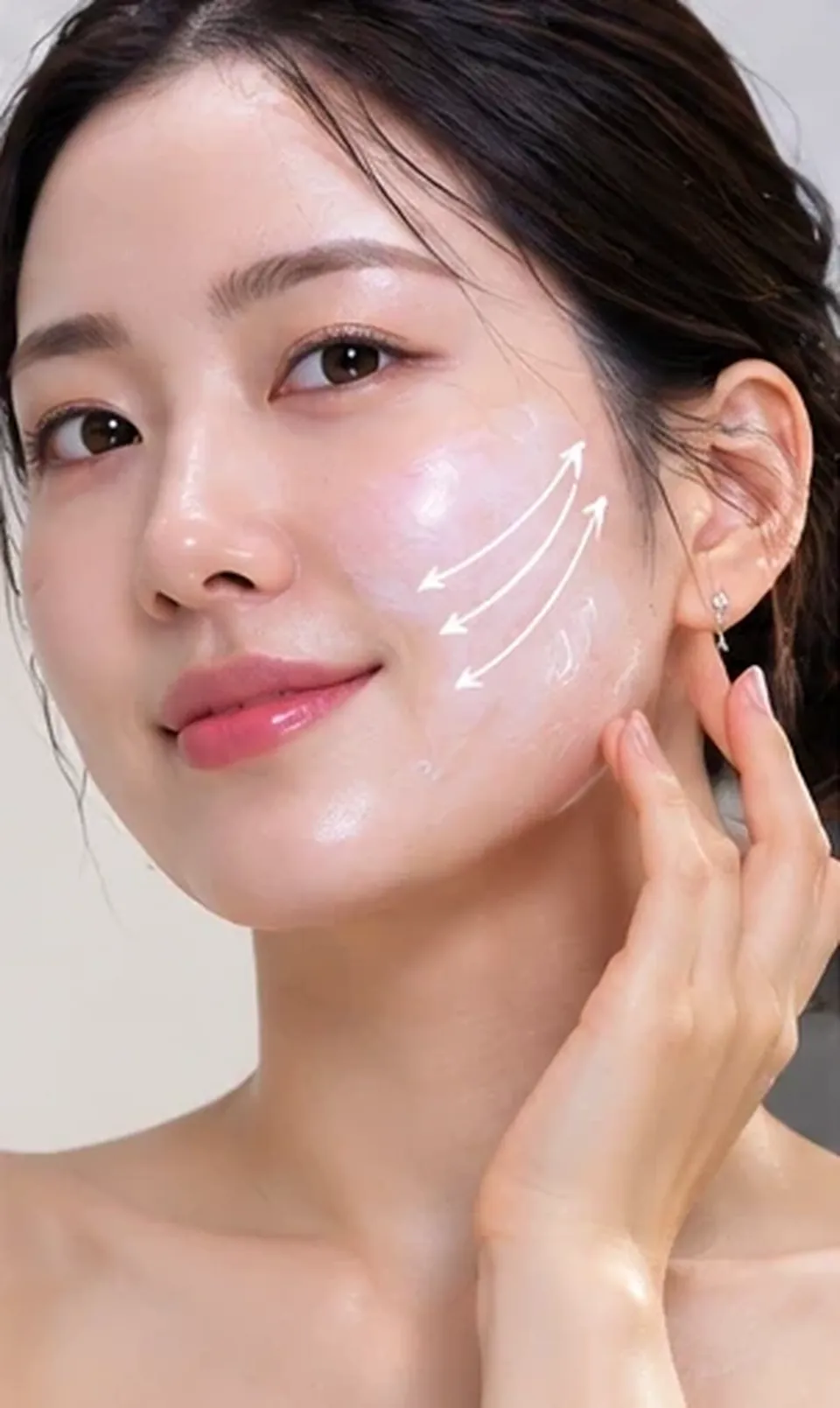
Use the amount recommended by the manufacturer, which is usually a few drops or one pump. Warm it between the fingertips and press it upward and outward along the cheeks, jaw and forehead. Gentle upward strokes are common, but pressing is kinder than tugging.
Avoid the immediate eye area unless the label says the serum is suitable there, as the skin is thinner. Add the neck and the back of the hands, which often show age first and are frequently forgotten.
Give the product a minute to absorb before the next layer. A Korean age-defying serum rewards patience and gentle handling. Consistency matters more than quantity, and most brands suggest using a serum regularly for several weeks before judging how your skin looks and feels.
Skin types and special cautions
Mature, dry and normal skin are the usual candidates, but anyone who wishes to look after the early signs of ageing can use a gentle formula. Oily skin may prefer a fluid texture, and acne-prone skin should look for non-comedogenic lightness and a short ingredient list.
Caution is needed with retinoids, strong acids and active peptides. Introduce them slowly, begin two or three evenings a week and do a small patch test first. Pregnant or breastfeeding women, and anyone with a skin condition, should ask a doctor or pharmacist before using retinoid products.
Always follow the maker's instructions, and stop use if stinging, swelling or lasting redness appears.
Choosing a premium Korean anti-ageing serum
Look for a house with a credible history of research. Korea's big luxury groups, among them AMOREPACIFIC, which owns Sulwhasoo, invest in laboratories and publish information about their ingredients. A premium Korean anti-ageing serum should earn its place through its formula, not its advertising. Compare the active list with your priorities rather than being drawn only by a famous name.
- Transparency: clear ingredient lists and usage guidance.
- Packaging: airless pumps protect sensitive actives.
- Compatibility: check it suits your cream and sunscreen.
- Source: buy from the brand or an authorised luxury retailer.
- Fragrance: select a level you tolerate well.
Be wary of dramatic promises. Honest brands speak about appearance, comfort and routine.
Mistakes, storage and good habits
The classic mistake is expecting overnight transformation. Skin cycles take weeks, and an inexpensive habit such as daily sunscreen often has more visible impact than any single bottle. Another error is layering too many actives, which can upset the skin barrier and lead to dryness or sensitivity.
Store the serum away from heat, sunlight and humidity, and use it within the period-after-opening time printed on the pack. Do not decant into unsterilised containers. Sleep, hydration and a balanced diet matter as well; skincare is only one part of the picture.
If you are unsure about a product, a visit to a dermatologist offers advice tailored to your skin rather than a general recommendation.
Frequently asked questions
What does antieijing sereom mean?
It is the Korean phrase for an anti-ageing serum, a concentrated treatment designed to care for the appearance of mature skin.
At what age should I start using a luxury Korean anti-ageing serum?
There is no fixed age. Many people begin in their late twenties or thirties for prevention, but the right moment depends on your skin and personal preference.
Can I use it with sunscreen?
Yes. Apply the serum first, moisturise, then finish with sunscreen in the morning. Sun protection is considered the key step in any anti-ageing routine.
Is a retinol serum safe for sensitive skin?
It can irritate. Begin slowly, patch test, follow the maker's directions and ask a health professional if you are unsure.
How long before I notice a difference?
Results vary and cannot be guaranteed. Most brands suggest consistent use over several weeks, alongside daily sun protection.
Resources to explore further
Sulwhasoo – international home page
Sulwhasoo's international store presents face serums, creams and masks built on Korean ginseng heritage.