
Luxury Korean Finishing Powder: A Soft, Refined Finish
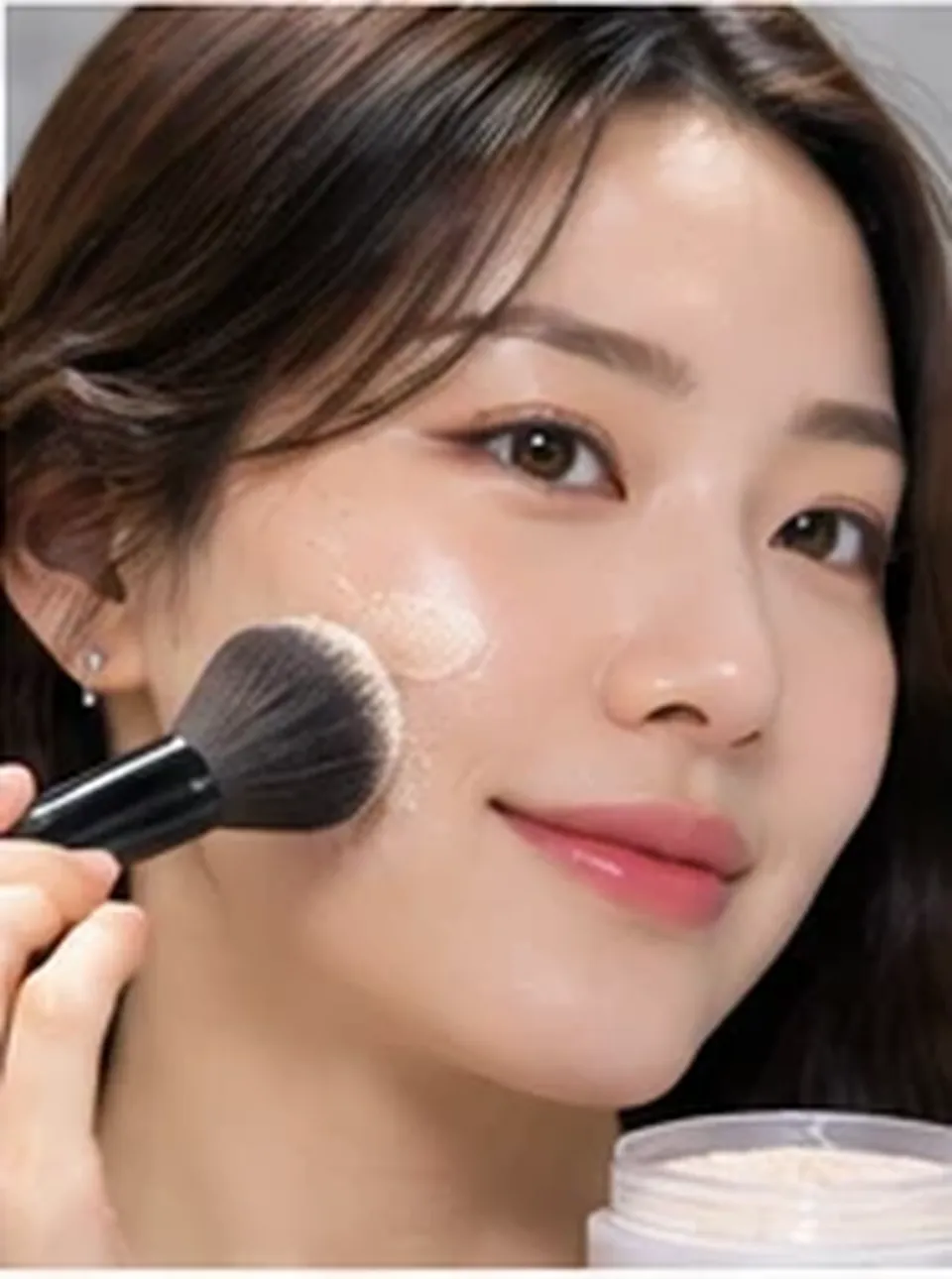
What a luxury Korean finishing powder is
A luxury Korean finishing powder is a very fine, light powder produced by a high-end house in Korea and applied as the last step of complexion make-up. Its purpose is to soften shine where it is unwanted, hold the layers beneath in place and leave a smooth, refined surface, all without erasing the glow that Korean beauty cherishes.
The category covers loose powders in jars, pressed powders in compacts and, increasingly, sheer powders sold in cushion-like cases. Each responds to a different habit: loose powder for a delicate, airy veil, pressed powder for touch-ups on the move.
In Korea the emphasis is on subtlety, and a luxury Korean finishing powder is chosen for exactly that restraint. A premium Korean setting powder is expected to be almost invisible, adding a velvety look rather than a heavy matte finish. The same houses that develop skincare, such as Hera and Amorepacific, tend to approach powder as a finishing touch to the skin rather than a coating over it.
Loose or pressed: textures of a high-end Korean powder
Loose powder is generally milled more finely and is applied with a large soft brush, giving the lightest veil that a luxury Korean finishing powder can offer. It works well at home, where there is room to handle a jar, and it suits people who like to control the amount precisely.
Pressed powder offers convenience and is easier to carry in a handbag. It usually contains a little binder, so it deposits slightly more colour and is ideal for mid-day refreshing.
Korean beauty culture values what is called a skin-like finish, meaning that the powder should look like a refined version of your own complexion. This explains why many Korean ranges favour sheer, finely milled particles over opaque, chalky ones. Some Korean ranges add a pearlescent or soft-focus element that diffuses light. Such particles can make the skin look smoother in photographs and in person, though they can also accentuate dryness on very thirsty skin. If you are unsure, examine the powder beside a window before buying.
Matching a high-end Korean setting powder to your skin
With a high-end Korean powder, oily and combination skin generally enjoys a translucent, slightly mattifying formula concentrated on the T-zone. Dry or mature skin does better with a finely milled, lightly luminous powder used only where makeup tends to move, such as around the nose.
Shade options in Korea range from truly translucent to pale tinted, with a few tones for deeper complexions. A tinted powder should match your foundation or cushion closely, or be one shade lighter, and a translucent one is the safest choice if you are unsure.
People with sensitive skin should read the ingredient list, avoid items containing fragrance if they react easily, and carry out a patch test first. Powders can also bother the eyes, so anyone who wears contact lenses should apply them gently and avoid the lash line.
Where the powder fits in a Korean routine
Korean routines are built around hydration, so the powder arrives last and is used sparingly. The order runs from cleansing and toning to serum, cream, sun protection, base, foundation or cushion, concealer, and finally powder. Between each layer, a short pause helps the surface settle.
The finishing step is also optional. On days when you prefer a dewy look, you may use powder only on the nose and chin. Some people skip it entirely in cooler months and reserve it for warm weather or long events.
In the evening, remove it with an oil or balm cleanser followed by a gentle foaming wash. Powder particles from any Korean luxury face powder can cling to the pores, so a careful double cleanse is part of keeping the skin comfortable.
Technique for a premium Korean setting powder
A refined result depends on gesture more than on product.
- Tap the brush on the back of your hand to remove excess before touching the face.
- Press, then roll, the powder over the T-zone instead of sweeping it.
- Use a smaller brush beneath the eyes and around the nose, where precision matters.
- Finish with a clean, fluffy brush to dust away any surplus.
- Mist lightly with a facial spray only if the maker states that it is suitable.
Choose a brush whose hairs are dense yet soft; stiff bristles leave streaks and can irritate the cheek. Holding it near the end of the handle gives a lighter touch and avoids pressing too hard. A puff gives more grip and is useful for setting concealer, while a brush gives a more diffuse finish. Wash both frequently with mild soap, as powder tools collect oil and dust quickly.
Choosing a luxury Korean finishing powder wisely
Judge a luxury Korean finishing powder by how it ages on the skin. After a few hours, it should neither cake nor turn orange, and it should leave the surface smooth. Check also how the packaging protects the product: a secure sifter, a mirror that does not detach and a firm closure are all signs of careful design.
Authenticity is important. Buy from the brand's own channels or from an authorised retailer, and examine the batch code and the seal. Beware of unusually generous offers from unknown sellers, which are common with imitations.
Look at the reputation of the maker for complexion care. Hera and Sulwhasoo are among the best-known Korean luxury names, and comparing their descriptions of texture and finish is a sensible starting point before you commit.
Think also about how the colour reads in different lights. A Korean luxury face powder that looks flawless indoors may appear pale in flash photography if it contains too much light-reflecting pigment. Test the product near a window and, if possible, take a photograph with and without flash. Finally, consider how a refined Korean loose powder will travel: a jar with a sifter is elegant at home but can spill in luggage, so a compact may be wiser for journeys.
Frequent mistakes and care of the product
A few habits explain most disappointments.
- Applying a thick layer over a wet base, which creates patches.
- Choosing a tint that is too dark and looks dusty.
- Dipping a dirty brush into the jar, which contaminates the powder.
- Using powder to cover dry patches instead of treating dryness with care.
- Keeping the compact in direct sunlight or a damp bathroom.
Keep the lid closed to prevent moisture, wipe the rim of the jar and store the item upright. Follow the period-after-opening symbol on the pack. If the surface becomes shiny and hard, which can happen with pressed powder, scrape it lightly with a clean tool as the manufacturer allows, or replace the product.
Frequently asked questions
Is a finishing powder the same as a setting powder?
They are very close, and brands use both terms. A finishing powder tends to emphasise a soft, refined look, while a setting powder emphasises holding make-up in place.
Will it make my skin look dry?
Only if too much is applied or the skin is very dehydrated. Use a small amount, concentrate on shiny zones and prepare the skin properly beforehand.
Can I use it without foundation?
Yes, many people dust a sheer, translucent powder over skincare and sun protection for a soft, matte-leaning finish. Choose a gentle formula and follow the manufacturer's directions.
How do I choose between loose and pressed?
Loose suits a precise, airy application at home, whereas pressed is better for touch-ups while travelling. Your habits should decide.
Is it suitable for sensitive skin or contact lens wearers?
It depends on the formula. Test a small area first, avoid the lash line and ask a health professional for advice if you have a known sensitivity.
Resources to explore further
Hera: cleansers, toners and make-up
The Hera site presents the Korean luxury house's face make-up collections, useful for comparing powder textures and finishes.